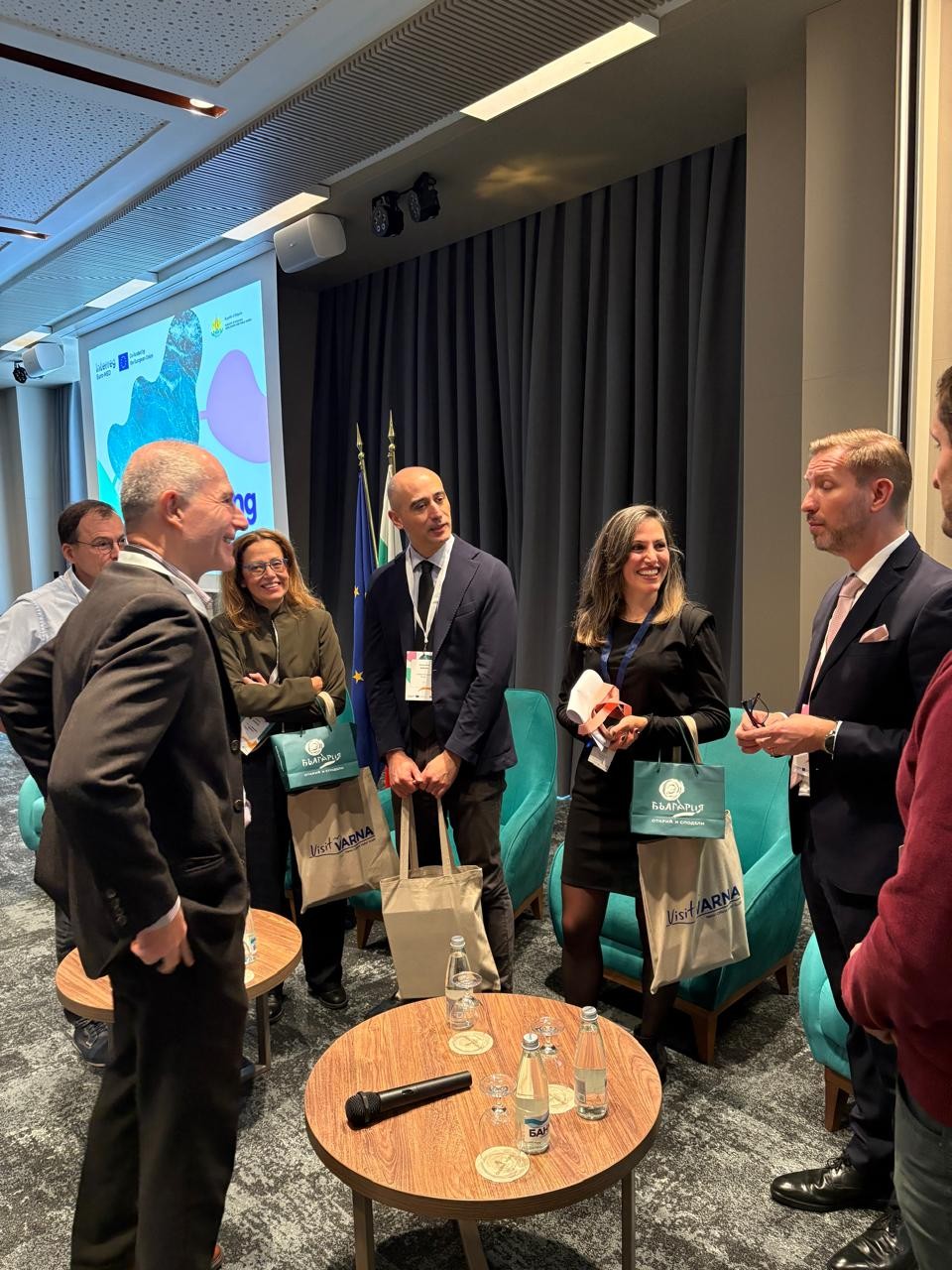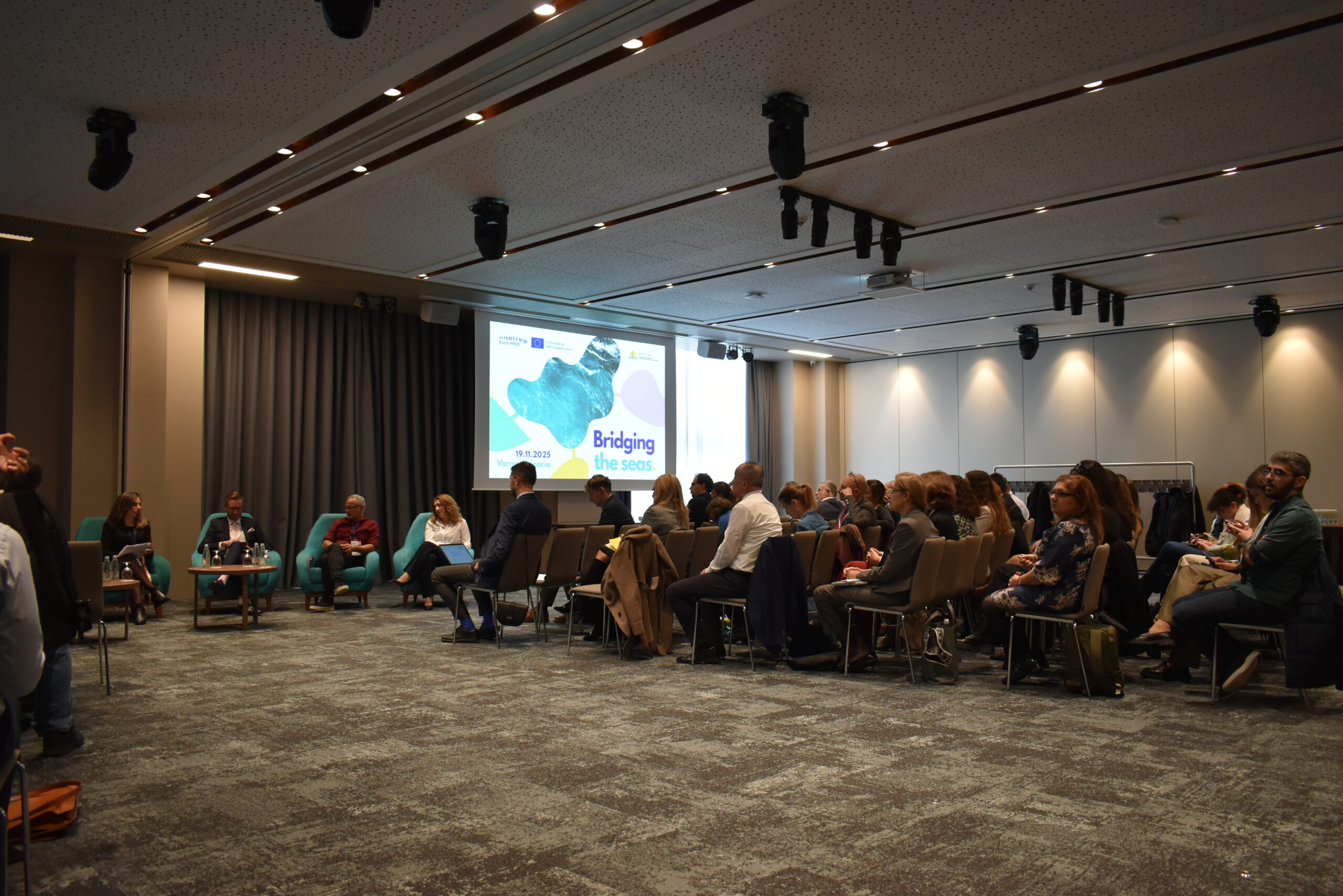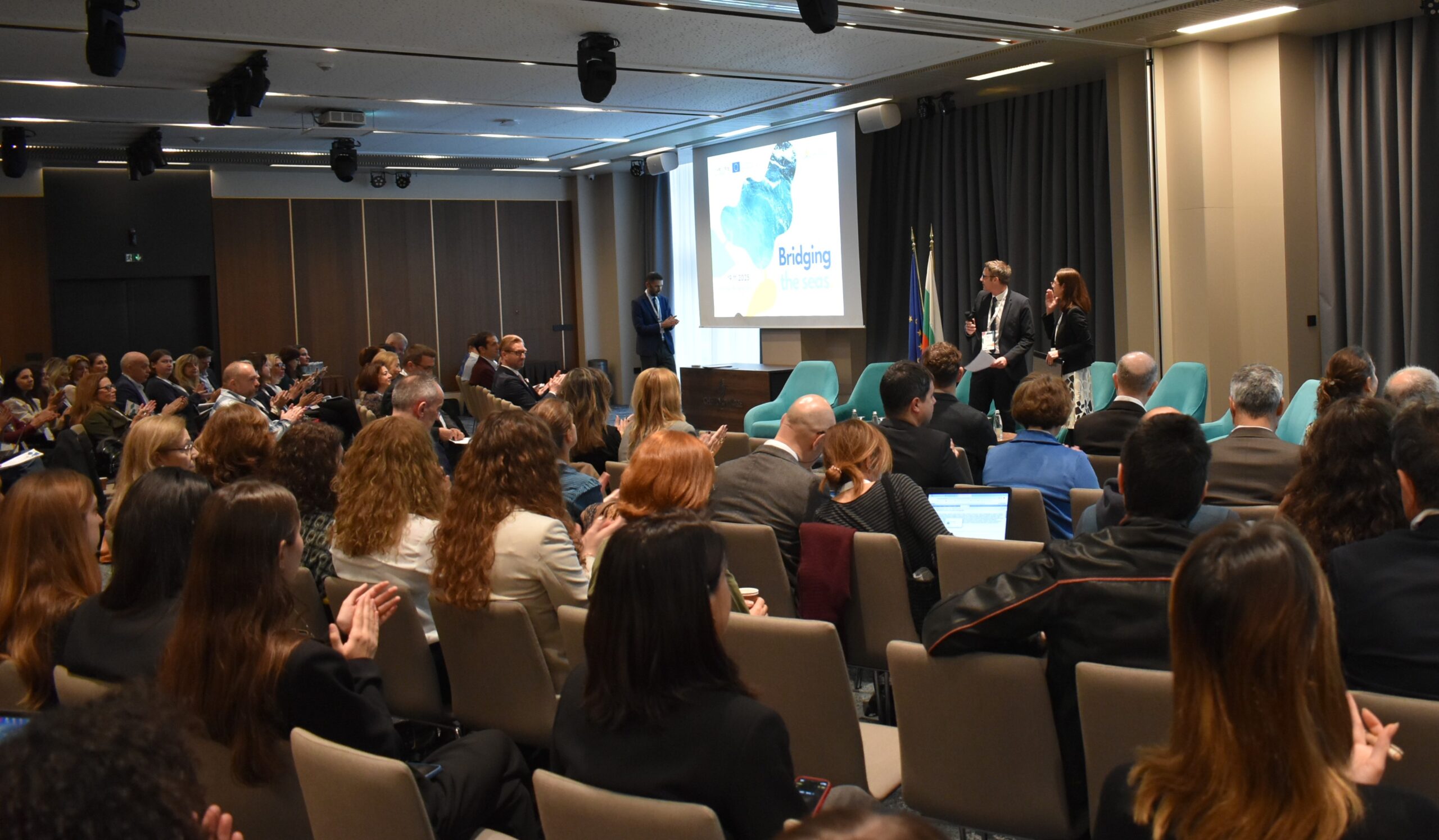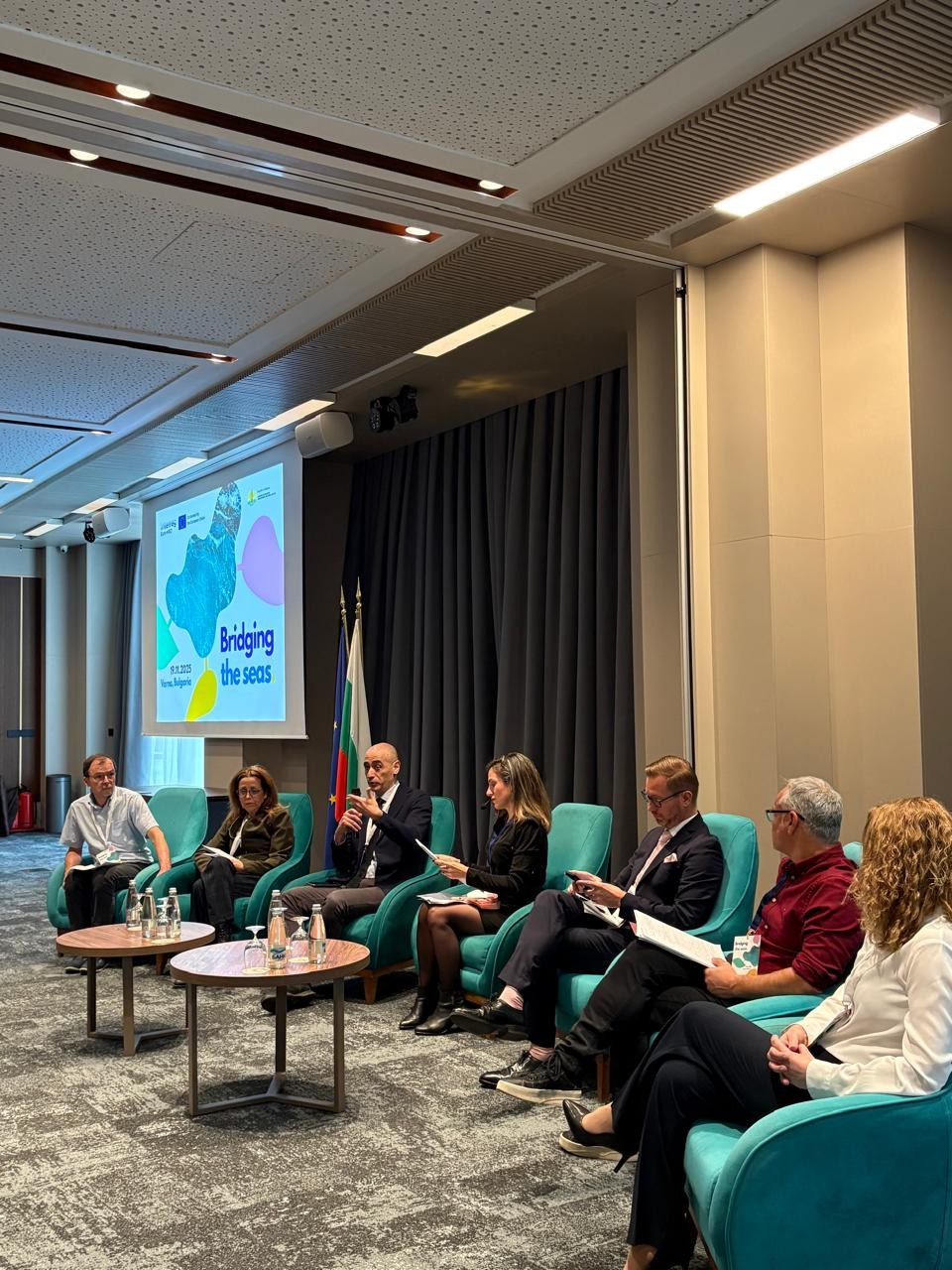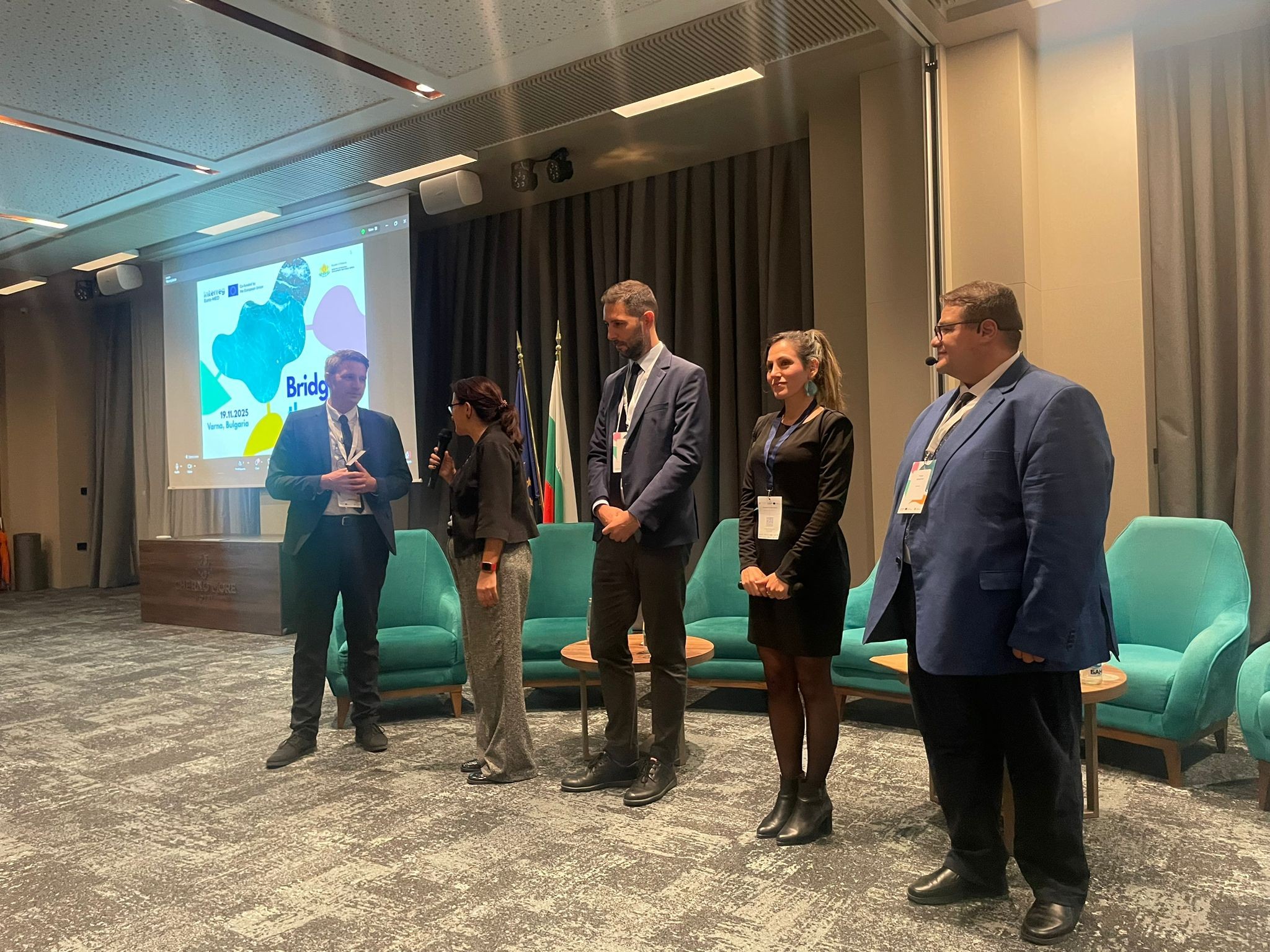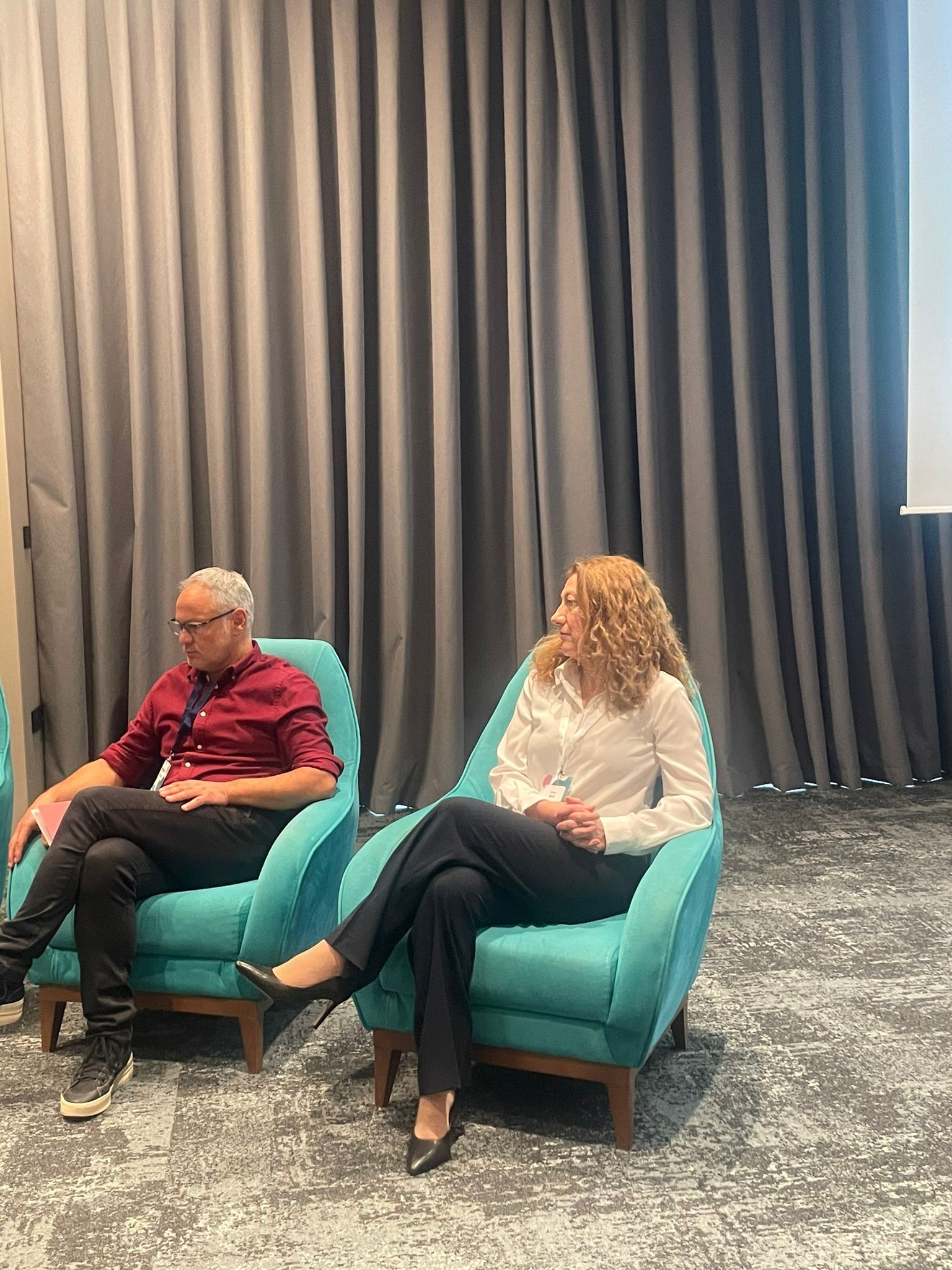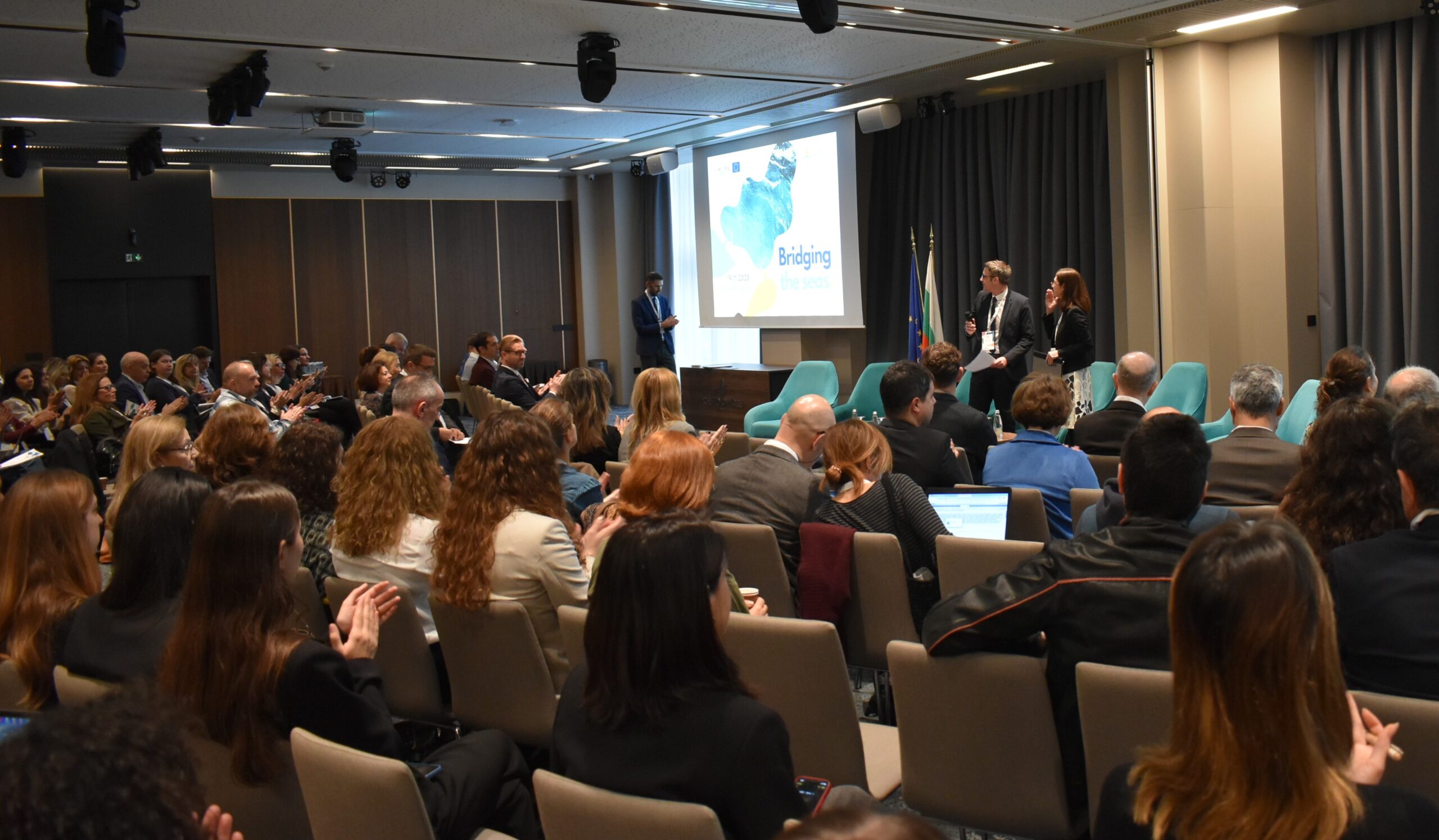

The first round table of this event organised highlighted how Interreg Euro-MED projects advance EU priorities through smarter, greener solutions, stronger governance, and deeper alignment with macro-regional strategies, demonstrating added value for Mediterranean and IPA partners.
Organised by the JS of the Interreg Euro-MED Program and the Institutional Dialogue Projects, the opening round table of the ‘Bridging the Seas’ event in Varna (Bulgaria) underscored the Interreg Euro-MED Programme’s growing impact in delivering EU priorities through transnational cooperation. Speakers showcased how the Programme’s expansion since 2007/13 has strengthened the region’s capacity to tackle smarter and greener challenges, with thematic and governance projects now producing tangible and transferable results.
Growing allignment
Panteleimon Xofis (Community4Nature Project) and Kristina Brščić (Dialogue4Tourism Project) presented innovative outputs addressing biodiversity and sustainable tourism, illustrating how Euro-MED projects serve as testbeds for solutions that can be scaled across the Mediterranean. Alessandro Daraio (Dialogue4Innovation Project) and Bernard Massabo (Dialogue4GreenLivingAreas Project) emphasized the Programme’s unique model, which fosters structured dialogue and ensures that pilot results feed into broader policy frameworks. The roundtable was moderated by Alexia Spyridonidou (Dialogue4Tourism Project).
The session also highlighted the Programme’s growing alignment with macro-regional strategies. Robert Lichtner (EUSDR) and Roberta Ruggeri (IPA Adrion STeP) stressed that these strategies rely on Interreg to operationalize long-term visions, turning policy ambition into practical solutions on the ground.
Strategic relevance
The round table confirmed Interreg Euro-MED’s increasing strategic relevance—boosting innovation, reinforcing policy coherence, and strengthening cooperation among EU and IPA partners. Speakers remarked the need to scale successful pilot initiatives into mainstream EU funding to ensure long-term sustainability and broader impact. They highlighted the importance of flexible cooperation frameworks capable of adapting to emerging Mediterranean challenges, while emphasizing the essential contribution of local actors in shaping strategic solutions. The discussion also pointed to the value of stronger cross-sector partnerships, confirming that coordinated action remains key to accelerating transformation across the region.